Skid-mounted layout
Compact integration of membrane trains, pressure vessels, pipework, valves, instruments, controls, flushing and CIP interfaces.
WTP product showcase
This factory-finished brackish-water reverse-osmosis system shows final assembly quality, membrane train layout, stainless-steel pipework and compact skid integration before delivery.
Brackish-water RO
BWRO is commonly used when the feed water is brackish groundwater, surface water, industrial process water or reuse water requiring desalination before final use.
Compact integration of membrane trains, pressure vessels, pipework, valves, instruments, controls, flushing and CIP interfaces.
Configured from feed-water TDS, hardness, silica, SDI, target permeate quality, recovery and operating pressure.
Factory-finished skid assembly supports clearer inspection, shorter site installation time and better delivery readiness.
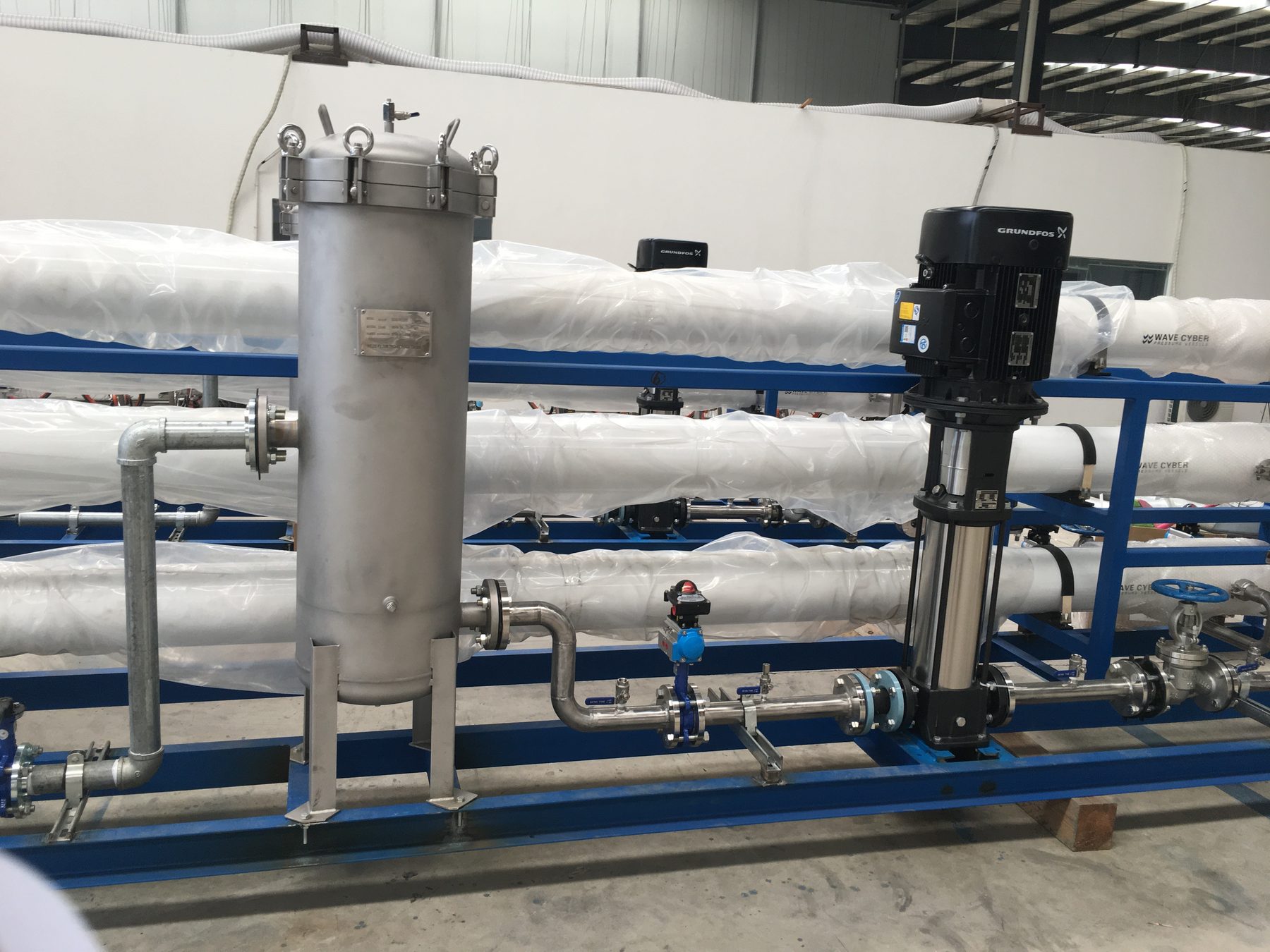 BWRO skid fabrication
What the completed skid shows
The completed BWRO skid is presented as a real WTP equipment reference. It demonstrates how MIT Water integrates RO membranes, piping, valves, instruments and support frame into a compact system.
Proposal inputs
To size a brackish-water RO skid correctly, MIT Water needs the feed-water report, required capacity, product-water target, operating hours, available space and site utility conditions.
TDS, hardness, alkalinity, silica, iron, manganese, turbidity and SDI determine pretreatment and membrane selection.
Flow rate, recovery target and concentrate handling define the RO train arrangement and pump sizing.
Footprint, power supply, automation level, local instruments and commissioning scope are reviewed before final design.